Showing posts with label Dr. Mary Newport. Show all posts

Wednesday, May 1, 2013

Sunday, April 14, 2013

ALZHEIMER'S DISEASE - WHAT IF THERE WAS A CURE? - BOOK EXCERPT

Here is a short excerpt from the book, where the author, Dr. Mary T. Newport (whose husband suffers from early-onset AD), finds out about a promising drug trial:

PATENT APPLICATION #20080009467

The first item to pop up was a 2008 patent application... on www.freepatentsonline.com.  This was a continuation of a patent application that was originally submitted by Samuel Henderson, Ph.D., executive director of research at Accera, in May 2000.  I printed out the seventy-five-page document and began to read it.  After several pages of legalese, there was a well-written summary of what was known about Alzheimer's Disease at that time in relation to their invention.  It talked about beta-amyloid plaques and neurofibrillary tangles, but also about a problem with glucose transport into neurons.  It said that researchers have discovered that neurons in certain areas of the brain in Alzheimer's Disease are unable to use glucose and that this same problem occurs in other neorodegenerative diseases, including Parkinson's Disease, Huntington's Disease and Lou Gehrig's Disease (Amyotrophic Lateral Sclerosis, or ALS), but in different parts of the brain.

This rang a bell because I had previously come across research about the problem of glucose transport in Alzheimer's patients by William Klein, Ph.D., and others (Klein, 2008).  Researchers described a problem with the location of insulin receptors, which would normally be found on the surface of the cell membranes but are not.  The hormone insulin is needed for glucose to enter cells.  Insulin attaches to the receptor on the cell membrane, initiating a chain of metabolic events that allows glucose into the cell where it is converted eventually into the energy molecule adenosine triphosphate (ATP).  ATP is necessary for the cell to function and maintains its very life.  Some scientists had even begun to call Alzheimer's Disease a "type 3" diabetes (de la Monte, 2005), a concept that will be discussed at length in Chapter 13.

The patent application then described the "invention," which was based on the known fact that neurons can use a type of fuel other than glucose called ketones or ketone bodies.  Ketones are transported into the cell by a different mechanism than glucose and therefore, if available in the bloodstream, can bypass the glucose/insulin transport problem and provide fuel for neurons and other brain cells, potentially keeping them alive.

You can order the book here, or check it out at your local library.

The book I have been quoting from was published in 2011.  The new addition is being released on April 15, 2013.  The first edition of Alzheimer's Disease: What if There Was a Cure?, which details Dr. Newport's discovery and use of medium-chain fatty acids (which act like alternative fuel in the Alzheimer's brain), had such a strong reception in 2011 that a second edition is now in demand. In this updated and expanded version, Dr. Newport, a neonatal practitioner, continues the story of her husband Steve's progress and provides the most recent research on the possible connection between Alzheimer's disease and the herpes simplex virus and nitrosamine substances, as well as how infection, inflammation, and genetic makeup may affect an individual's response to fatty acid therapy. Among many other updates, Dr. Newport details the latest clinical trials aimed at removing beta-amyloid, which accumulates in the Alzheimer's brain.

I pre-ordered the book a few weeks ago and expect to receive it in a few days.  


Friday, May 25, 2012

COCONUT OIL AND ALZHEIMER'S - THE NEWS IS SPREADING

I came across this article today on the website Health Impact News Daily on some of the information available on the use of coconut oil to treat Alzheimer's Disease.

by Brian Shilhavy Health Impact News


The Failure of the Medical System to Treat Alzheimer’s

The news about how effective coconut oil is in treating Alzheimer’s Disease is spreading fast, as news about the failure of drugs in treating Alzheimer’s continues to make headlines in 2012. Just recently, drug companies Pfizer and Medivation admitted that the new drug they were developing for Alzheimer’s, dimebon, not only did not help patients in trials, but made patients worse. The expensive drug had already reached phase III trials. (See story here on ABC News)
In May 2012 a federal judge ruled that a case against Harvard Medical School and its teaching hospitals regarding fraudulent research using public funds for Alzheimer’s disease was to proceed. (Read the story here)
So as the development of this drug has now been abandoned, and so many other potential drugs have also failed (possibly due to fraudulent research?), many are beginning to look at the role of diet in Alzheimer’s and focusing on prevention. People are also beginning to see positive results in using coconut oil to reverse the effects of Alzheimer’s.

The harm of low-fat high-carbohydrate diets in cholesterol uptake in the brain

One of the most recent studies that looked at the role of nutrition in Alzheimer’s was published in the European Journal of Internal Medicine: “Nutrition and Alzheimer’s disease: The detrimental role of a high carbohydrate diet”1.
The authors of this study have noted how researchers have begun to direct their energies towards understanding the earlier stages of AD, since drug research in later stages has not been very successful. They note that several researchers have noticed a strong correlation between insulin resistance in the brain and early AD, suggesting that AD might be considered a neuroendocrine disorder of the brain or so-called “type 3 diabetes.” Other observations have noted an association of AD with mitochondrial dysfunction, which is also common in Parkinson’s disease, and amyotrophic lateral sclerosis (ALS).
But the authors’ main conclusions regarding the early causes of AD center around the transport of cholesterol from the blood stream to the brain. They state that there is mounting evidence which suggests that a defect in cholesterol metabolism in the brain may play an important role in AD. They give a nice summary of the brain’s dependency on cholesterol:
The brain represents only 2% of the body’s total mass, but contains 25% of the total cholesterol. Cholesterol is required everywhere in the brain as an antioxidant, an electrical insulator (in order to prevent ion leakage), as a structural scaffold for the neural network, and a functional component of all membranes. Cholesterol is also utilized in the wrapping and synaptic delivery of the neurotransmitters. It also plays an important role in the formation and functioning of synapses in the brain.
They point to several studies that show a lack of cholesterol present in the brains of AD patients which is so vital for several functions, and also note that other studies show this cholesterol deficiency in dementia and Parkinson’s disease. In contrast, high cholesterol levels are positively correlated with longevity in people over 85 years old, and in some cases has been shown to be associated with better memory function and reduced dementia.
The authors go on to explain that the lipid theory of heart disease started by the work of Ancel Keys in the 1960s led to dietary beliefs that cholesterol was to be avoided in the diet, and with that belief came the “over-zealous prescription of cholesterol-reducing medications over the same decades in which there has been a parallel rise in AD prevalence.”
Another result of the low-fat dietary belief was the replacement of fats in the diet with refined carbohydrates, which leads to a rise in blood glucose levels and over time to insulin resistance and diabetes. They point out that the prevalence of fructose, mostly in the form of high fructose corn syrup, is ten times more reactive than glucose in inducing glycation. This impairs serum proteins, and they hypothesize that this leads to a depletion of much needed cholesterol and fat in the brain. Strong evidence in favor of their hypothesis is the fact that studies show patients with type-2 diabetes are at two to five times increased risk to AD.
Increased lipid peroxidation is also shown to be an early cause of Alzheimer’s disease. Liquid vegetable oils, the polyunsaturates, are highly prone to oxidation and rancidity, and it is now well known that in the form of trans fatty acids (through the process of hydrogenation) they are extremely toxic. (More research on polyunsaturated oils here.)
Dr. Raymond Peat has talked about the difference between polyunsaturated oils and saturated oils in their importance for brain tissue for years now:
Brain tissue is very rich in complex forms of fats. The experiment (around 1978) in which pregnant mice were given diets containing either coconut oil or unsaturated oil showed that brain development was superior in the young mice whose mothers ate coconut oil. Because coconut oil supports thyroid function, and thyroid governs brain development, including myelination, the result might simply reflect the difference between normal and hypothyroid individuals. However, in 1980, experimenters demonstrated that young rats fed milk containing soy oil incorporated the oil directly into their brain cells, and had structurally abnormal brain cells as a result. Lipid peroxidation occurs during seizures, and antioxidants such as vitamin E have some anti-seizure activity. Currently, lipid peroxidation is being found to be involved in the nerve cell degeneration of Alzheimer’s disease.2

How Coconut Oil Can Help Alzheimer’s

Coconut oil, by contrast, is highly saturated, and in its natural unrefined form has a shelf life of more than 2 years. Unlike unsaturated oils, it is not prone to oxidation.
Also, the study from the European Journal of Internal Medicine referenced above notes that Alzheimer’s, Parkinson’s disease, and amyotrophic lateral sclerosis (ALS) all have an association with mitochondrial dysfunction. A study published in 2010 used coconut oil to show that a diet enriched in the saturated fatty acids of coconut oil offered strong advantages for the protection against oxidative stress in heart mitochondria.3
Much research is also being uncovered now on the advantages of high HDL cholesterol levels, besides the study we mentioned above in direct relation to Alzheimer’s. A study appearing in the American Journal of Cardiology in February 2011 showed that the higher men’s HDL cholesterol levels, the longer they lived and the more likely it was that they would reach the age of 85.4 A diet with adequate amounts of saturated fat is essential to keeping HDL high cholesterol levels. Those with deficiencies and suffering from neurological disorders need to consider a diet that is high in saturated fat, in stark contrast to the mainstream dietary advice for low-fat diets that might be causing many of these late-in-life diseases.
Another major advantage the saturated fat of coconut oil provides is its ability to provide the brain with an alternate source of energy in ketones. Ketones are high energy fuels that nourish the brain. Our body can produce ketones from stored fat while fasting or in starvation, but they can also be produced by converting medium chain fatty acids in certain foods. Coconut oil is nature’s richest source of these medium chain triglycerides (MCTs). A study done in 2004 took MCTs from coconut oil and put them into a drink that was given to Alzheimer’s patients while a control group took a placebo.5 They observed significant increases in levels of the ketone body beta-hydroxybutyrate (beta-OHB) 90 minutes after treatment when cognitive tests were administered. Higher ketone values were associated with greater improvement in paragraph recall with MCT treatment relative to placebo across all subjects.
As coconut oil’s use becomes more accepted and widespread, and as people begin to realize the dangers of the low-fat dietary belief, we are starting to see more testimonies in relation to diseases like Alzheimer’s. One of the most widely published reports is from Dr. Mary Newport as reported by the St. Petersburg Times on October 29, 20086. Dr. Newport’s husband had been diagnosed with early onset Alzheimer’s and was watching her husband quickly deteriorate. After using drugs that slowed down the effects of Alzheimer’s, she looked into clinical drug trials and found one based on MCTs that not only slowed the progression of Alzheimer’s, but offered improvement. Not being able to get her husband into one of these trials, she began to give him Virgin Coconut Oil, and saw incredible improvement in his condition.
The coconut oil he’d ingested seemed to “lift the fog.” He began taking coconut oil every day, and by the fifth day, there was a tremendous improvement. “He would face the day bubbly, more like his old self,” his wife said. More than five months later, his tremors subsided, the visual disturbances that prevented him from reading disappeared, and he became more social and interested in those around him.7


Click here to read the rest of the article.

Tuesday, May 17, 2011

NITRITES AND NITRATES IN FOOD MAY CAUSE ALZHEIMER'S

A recent blog post by Dr. Mary Newport:

On April 7, 2011, a former surgeon general and Dr. Suzanne de la Monte appeared on the Dr. Oz Show entitled, "A Revolutionary Breakthrough in Alzheimer's Disease," (can be watched on his website) where she presented her important research. She is the doctor who coined the term "type 3 diabetes" in reference to Alzheimer's disease.She found by accident that giving a nitrosamine compound called streptozotocin, used to deliberately produce diabetes, caused Alzheimer's in her lab mice. She learned that the brain produces its own insulin.

She further found that this compound causes production of toxic lipids in the liver that cross the blood brain barrier and damage certain cells such that the brain develops insulin deficiency and insulin resistance. Nitrites and nitrates, found in very many processed foods, are nitrosamine compounds and could very well explain the epidemics of Alzheimer's, autism, diabetes, MS, Parkinson's and ALS, along with other neurodegenerative diseases that have insulin resistance, decreased glucose uptake as part of the process. These diseases have all been on the increase as processed foods have taken over our diets. I will add Dr. de la Monte's references to the website http://www.coconutketones.com/, in the very near future. These nitrites and nitrates are in most bacon, ham and other meats, deli meats, whether pre-packaged or cut at the counter, processed cheeses, cereals, breads, pretzels, crackers, white flour and anything that contains white flour, certain beers, scotch and some other whiskeys.

Now something that has caught my attention for newborns and children: I found one of these offending compounds, thiamine mononitrate, in the Carnation infant formulas, some of the jarred baby foods, especially the junior combinations, cereals and other infant prepared foods such as macaroni and cheese. The government requires that certain vitamins such as thiamine are added to enrich foods that have been stripped of these nutrients by processing, most notably white flour and other grains. Thiamine mononitrate is a synthetic source of vitamin B1, rather than a naturally occurring vitamin, and is added to very many foods. Just look at the ingredients labels. Most people eat something with thiamine mononitrate in it for nearly every meal. Naturally occurring Vitamin B1 (thiamine) is usually water soluble, meaning that if you eat an excess of it, you will pass it out in the urine; however, thiamine mononitrate is fat soluble and the excess accumulates in the liver and fat cells. The FDA regulations (21 CFR 184.1878) say that thiamine mononitrate may be used in food "with no limitation other than good manufacturing practice" and that it "may be used in infant formula". These compounds could slowly kill off insulin producing cells in the brain and other organs, and when enough cells have been effected symptoms will begin to emerge.

This could explain the classic development of autism in children at 1 1/2 to 2 years of age who were previously thought to be normal. And in Alzheimers' it is believed that the disease process begins at least 10-20 years before symptoms appear. Animal studies need to be done to determine if thiamine mononitrate produces Alzheimer's disease, autism, type 2 diabetes and the other diseases mentioned above. In the meantime, it would behoove us to read the labels and eliminate anything from the diet that includes nitrosamines, nitrites, nitrates; look for these words alone or in combination with other words, such as thiamine mononitrate.

What is left for us to eat? Stay away from packaged and other processed foods and eat whole foods: organic whenever possible, vegetables, fruits, eggs, dairy, goat milk and cheeses, nuts, legumes, whole grains (without added nitrates) grass fed beef, free range chicken, "natural" deli meats that have nothing added (they can be frozen to prolong use). I thought we were adhering very closely to a whole food diet until learning that many of the foods we were eating, such as deli meats and some "whole grain" breads and cereals, contain nitrites or nitrates. This could explain some of the deterioration we have seen in spite of everything else we are doing. Most important to our newest generation, mothers can avoid this problem by breastfeeding their babies for as long as possible.

Nitrites and nitrates are just one group of compounds we need to worry about for our newborns and toddlers. Also, consuming foods with medium chain fatty acids, such as coconut oil and MCT oil, can at least partly bypass the problem of insulin resistance by providing an alternative fuel to glucose for brain cells. And how could this possibly be related to the herpes simplex issue that I have written about? I found a 1977 article from the lab of Dr. George Cahill, Jr. ("Studies of Streptozotocin-induced insulitis and diabetes", Proc Natl Acad Sci USA, 74(6): 2485-2489, June 1977), in which he used streptozotocin to produce diabetes in mice by destroying the beta cells of the pancreas-- an unexpected finding was an increased production of a type C virus in the beta cells that survived. Could it be that the virus is involved as part of the process that destroys the cell after exposure to nitrosamines, or is an opportunistic infection that takes over the damaged cells, which further complicates the Alzheimer’s disease process? The bottom line is to avoid any foods that contain nitrites or nitrates or any ingredient in which one of the words appears.

To read the article and comments, click here.

Friday, May 13, 2011

COULD TAKING COCONUT OIL BE A DIETARY CURE FOR ALZHEIMER'S DISEASE?

From Jimmy Moore of The Livin' La Vida Low-Carb Show:

One of the worst possible neurological diseases people could ever be diagnosed with is Alzheimer’s disease. From the memory loss to weight loss to depression, it’s a sad state for the people afflicted with it as well as the family members who are left to deal with a loved one who may or may not recognize them on a day-to-day basis. With 5.3 million Americans suffering from Alzheimer’s disease today with a new case being identified every 70 seconds, finding a solution for this problem is a serious topic worthy of discussion. This podcast guest stumbled upon an unexpected dietary “cure” for her husband’s Alzheimer’s disease.

In Episode 240 of “The Livin’ La Vida Low-Carb Show with Jimmy Moore,” we are privileged to hear from Dr. Mary Newport who Jimmy first found out about after reading this St. Petersburg Times story about how feeding her husband coconut oil greatly IMPROVED his Alzheimer’s. It was such an extraordinary story that Jimmy just HAD to book her for an interview to tell this remarkable story to his listeners. She correctly identifies the glucose connection to Alzheimer’s disease which is now becoming well-known as Type 3 diabetes, how ketone bodies are the preferred fuel for brain function, and why medium chain triglycerides (MTCs) found in coconut oil are a miracle for her husband’s condition. This is one of the most stunning personal testimonies of how a high-fat, low-carb ketogenic diet can dramatically improve health. You can’t help but be a believer after listening to Dr. Newport gush about her husband Steve is overcoming his tremors, regain cognitive function, and DEFEATING his Alzheimer’s.

To listen to the podcast, click here.

Saturday, May 7, 2011

DR. MARY NEWPORT REVERSES HER HUSBAND'S AD SYMPTOMS WITH COCONUT OIL

This is one of the first things I found concerning Dr. Mary Newport and how she treated her husband, Steve, with coconut oil.  The first video talks about Steve's decline into AD, and the rest chronicle the recovery of his memory and personality after taking therapeutic does of coconut oil.


COCONUT OIL AND ALZHEIMER'S DISEASE - ALLIANCE FOR NATURAL HEALTH

How worried should drug companies be about supplements eating into their monopoly profits? A lot—as this story will show. Please share it with anyone you know who is suffering from Alzheimer’s or is worried about it.
 
Of course, just about everyone worries about Alzheimer’s. It currently afflicts 5.2 million people in the US and is the seventh leading cause of death. The cost of treating it is estimated at $148 billion.

Mary Newport, MD, has been medical director of the neonatal intensive care unit at Spring Hill Regional Hospital in Florida since it opened in 2003. About the same time the unit opened, her husband Steve, then 53, began showing signs of progressive dementia, later diagnosed as Alzheimer’s Disease. “Many days, often for several days in a row, he was in a fog; couldn’t find a spoon or remember how to get water out of the refrigerator,” she said.

They started him on Alzheimer’s drugs—Aricept, Namenda, Exelon—but his disease worsened steadily. (It should be noted that the latest research shows that the various Alzheimer’s drugs, like Aricept, have proven disappointing, with little real benefit and often distressing side effects.) When Dr. Newport couldn’t get her husband into a drug trial for a new Alzheimer’s medication, she started researching the mechanism behind Alzheimer’s.

She discovered that with Alzheimer’s disease, certain brain cells may have difficulty utilizing glucose (made from the carbohydrates we eat), the brain’s principal source of energy. Without fuel, these precious neurons may begin to die. There is an alternative energy source for brain cells—fats known as ketones. If deprived of carbohydrates, the body produces ketones naturally.

But this is the hard way to do it—who wants to cut carbohydrates out of the diet completely? Another way to produce ketones is by consuming oils that have medium-chain triglycerides. When MCT oil is digested, the liver converts it into ketones. In the first few weeks of life, ketones provide about 25 percent of the energy newborn babies need to survive.

Dr. Newport learned that the ingredient in the drug trial which was showing so much promise was simply MCT oil derived from coconut oil or palm kernel oil, and that a dose of 20 grams (about 20 ml or 4 teaspoons) was used to produce these results. When MCT oil is metabolized, the ketones which the body creates may, according to the latest research, not only protect against the incidence of Alzheimer’s, but may actually reverse it. Moreover, this is also a potential treatment for Parkinson’s disease, Huntington’s disease, multiple sclerosis and amyotrophic lateral sclerosis (ALS or Lou Gehrig’s disease), drug-resistant epilepsy, brittle type I diabetes, and type II (insulin-resistant) diabetes.

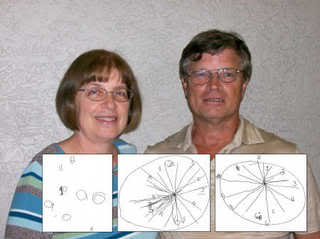
So Mr. Newport, not being able to get into the drug trial, started taking the coconut oil twice a day. At this point, he could barely remember how to draw a clock. Two weeks after adding coconut oil to his diet, his drawing improved. After 37 days, Steve’s drawing gained even more clarity. The oil seemed to “lift the fog,” and in the first sixty days, Dr. Newport saw remarkable changes in him: every morning he was alert and happy, talkative, making jokes. His gait was “still a little weird,” but his tremor was no longer very noticeable. He was able to concentrate on things that he wanted to do around the house and in the yard and stay on task, whereas before coconut oil he was easily distractible and rarely accomplished anything unless he was directly supervised.

Over the next year, the dementia continued to reverse itself: he is able to run again, his reading comprehension has improved dramatically, and his short-term memory is improving—he often brings up events that happened days to weeks earlier and relays telephone conversations with accurate detail. A recent MRI shows that the brain atrophy has been completely halted.

Let’s take a moment to consider what actually happened here. Synthetic (patentable) Alzheimer’s drugs have failed. A drug company reluctantly decides to put a non-patentable natural substance (medium-chain triglycerides derived from coconut or palm) through an FDA trial. It works. But, darn it, a smart doctor figures out that a natural food can be substituted for the super-expensive drug. Not only that, the ketones from natural coconut oil last in the body longer than the drug version—eight hours instead of three hours. This is enough to make a drug company start worrying about its future. What if this natural health idea really catches on? Goodbye to monopoly profits!

Coconut oil can be found in many health food stores and even some grocery stores. One large chain sells a non-hydrogenated (no trans-fat) brand of coconut oil in a one-liter size (nearly 32 ounces) for about $7. It can be purchased in quantities as small as a pint and up to five gallons online. It is important to use coconut oil that is non-hydrogenated and contains no trans-fat. We would also strongly encourage the use of virgin oil (chemicals used to extract non-virgin oil are potentially dangerous, and better still, virgin organic, still quite reasonably priced.)

For more information, see Dr. Newport’s website. Sadly, you will not find any information on ketones, or the use of coconut oil or MCT oil, on the Alzheimer’s Association website.

Coconut oil is not the only natural product that has the potential to turn Alzheimer’s around. We will cover some other ones, and drug industry efforts to steal some of them, in a future issue.

To read the full article and comments, click here.

Related Post:
What if There Was a Cure for Alzheimer's Disease and No One Knew?

WHAT IF THERE WAS A CURE FOR ALZHEIMER’S DISEASE AND NO ONE KNEW?

A Case Study by Dr. Mary Newport - July 22, 2008

There is a growing epidemic of obesity, type II diabetes, cardiovascular disease, and predictions that 15,000,000 people in the United States alone will have Alzheimer’s Disease by the year 2050.

In 2001, Dr. Richard L. Veech of the NIH, and others, published an article entitled, “Ketone bodies, potential therapeutic uses.” In 2003, George F. Cahill, Jr. and Richard Veech authored, “Ketoacids? Good Medicine?” and in 2004, Richard Veech published a review of the therapeutic implications of ketone bodies. These articles are not found in journals that the average physician would read, much less the lay public. Unless you are researching the topic, it is unlikely that you would ever randomly come across this information.

Click here to read the rest of the article and find out how Dr. Newport began to look for answers when her husband, at the age of 53, started showing signs of dementia, and how what she found out reversed his symptoms, restoring his memory and personality.